
If you are planning to install rooftop solar panels in Lucknow, one of the biggest decisions you will make is choosing the right type of solar system. Most homeowners are confused between an On-Grid vs Hybrid Solar System because both have different advantages.
Some people only want to reduce their monthly electricity bill, while others also want backup during power cuts. The right choice depends on your electricity usage, budget, roof space, and whether uninterrupted power is important for your home or business.
Many homeowners buy a solar system without understanding these differences. As a result, they either spend more money than necessary or install a system that does not meet their daily energy needs.
This guide explains everything in simple English. By the end of this article, you will know which system is better for your property in Lucknow and why choosing the correct system can save you money for the next 25 years.
If you are still planning your project, you can also read our guide on Best Solar Company in Lucknow to understand how to choose a reliable installer before investing in rooftop solar.
Quick Answer
If your area has a reliable electricity supply and your main goal is reducing electricity bills, an On-Grid Solar System is usually the best option.
If your home experiences frequent power cuts and you need backup during outages, a Hybrid Solar System is often the better choice because it combines solar panels, batteries, and the electricity grid.
There is no single system that is perfect for everyone. The right option depends on your electricity consumption, roof space, daily power usage, and budget.
If you are unsure whether your roof can support a solar system, read our Roof Space Guide for Solar Panels in Lucknow before making a decision.
What Is an On-Grid Solar System?
An On-Grid Solar System is directly connected to the electricity grid.
During the day, solar panels generate electricity from sunlight. Your home first uses this solar power. If additional electricity is required, it is automatically supplied from the grid.
If your solar panels generate more electricity than your home consumes, the extra power is exported to the electricity grid through net metering.
This exported electricity is adjusted against your electricity bill, helping you save more every month.
Because there is no battery, an On-Grid Solar System is generally more affordable than a Hybrid Solar System.Most homeowners install 3kW Solar Systems because they provide an excellent balance between investment and monthly savings.
How Does an On-Grid Solar System Work?
The working process is simple.
Solar panels absorb sunlight and generate Direct Current (DC) electricity.
The solar inverter converts DC into Alternating Current (AC), which is used by household appliances.
The electricity produced is first consumed inside your home.
If additional electricity is required, it is automatically taken from the electricity grid.
If excess electricity is generated, it is exported through net metering.
This entire process happens automatically without any manual operation.
Advantages of an On-Grid Solar System
There are several reasons why On-Grid Solar Systems are the most popular choice for homeowners in Lucknow.
Lower Installation Cost
Since batteries are not required, the initial investment is lower compared to Hybrid systems.
Higher Return on Investment
Without battery replacement costs, homeowners usually recover their investment faster.
Lower Maintenance
There are fewer components, making maintenance easier and more affordable.
Government Subsidy
Residential On-Grid systems are eligible under the PM Surya Ghar: Muft Bijli Yojana, subject to the latest eligibility rules and applicable government guidelines.
Net Metering Benefits
Extra electricity generated during the day is exported to the grid, reducing future electricity bills.
Disadvantages of an On-Grid Solar System
Although On-Grid systems are excellent for reducing electricity bills, they also have limitations.
No Backup During Power Cuts
If the electricity grid fails, a standard On-Grid Solar System automatically shuts down for safety reasons.
This means your solar panels also stop supplying electricity until grid power returns.
For homeowners who experience frequent power outages, this can be a major disadvantage.
Depends on Grid Availability
The system performs best where electricity supply is reliable.
What Is a Hybrid Solar System?
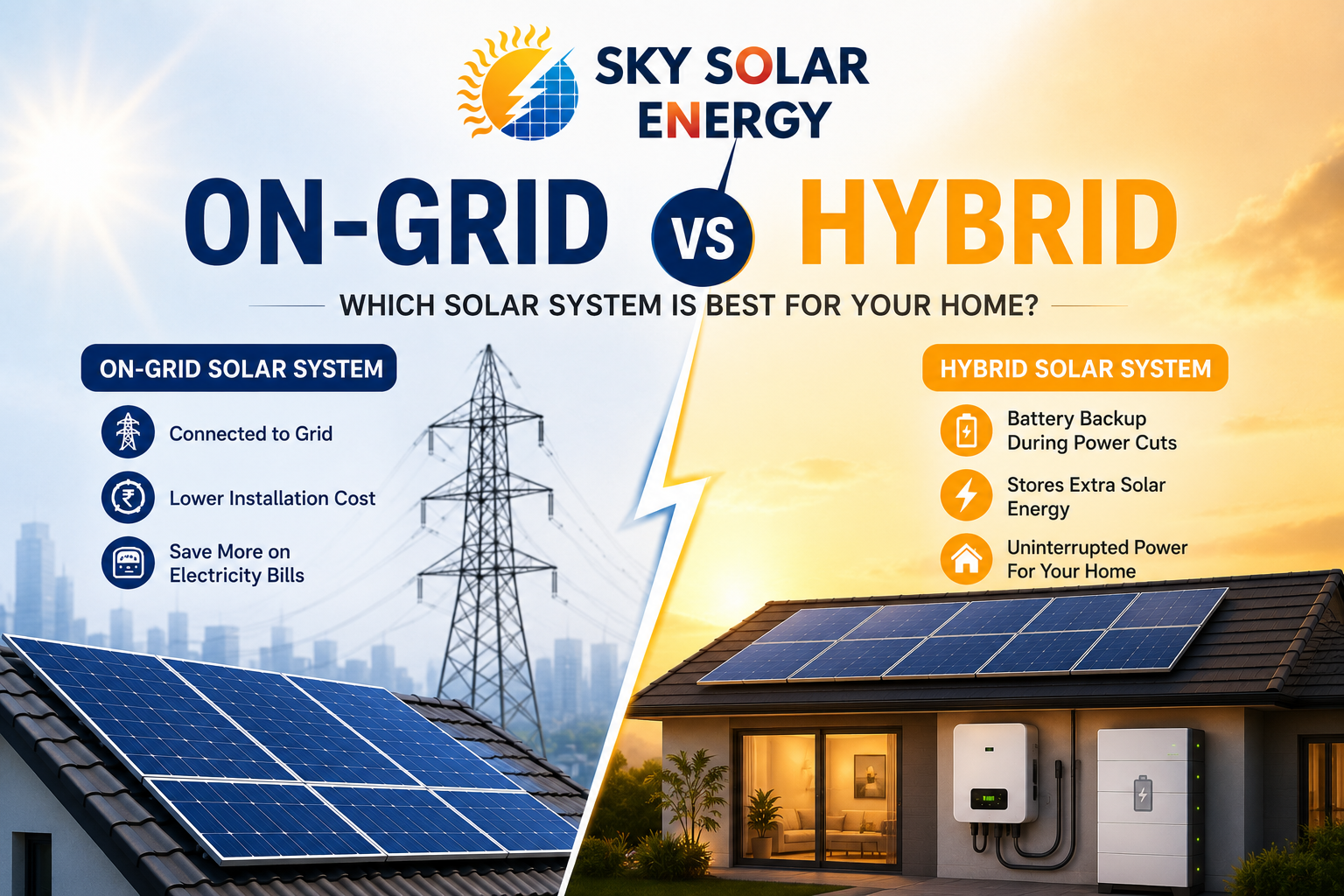
A Hybrid Solar System combines the advantages of an On-Grid Solar System with battery backup.
It stores excess solar energy inside batteries instead of sending all unused electricity to the grid.
When there is a power cut, the battery automatically supplies electricity to selected appliances such as lights, fans, Wi-Fi routers, televisions, refrigerators, or other connected loads, depending on the system design.
This makes Hybrid systems ideal for homes where uninterrupted power is important.
Why Are Hybrid Solar Systems Becoming Popular in Lucknow?
Although electricity supply has improved in many parts of Lucknow, some residential areas and commercial properties still experience occasional power cuts.
Many homeowners also work from home, operate small businesses, or have elderly family members who need uninterrupted electricity.
For such situations, Hybrid Solar Systems provide peace of mind by offering both electricity savings and backup power.
How Does a Hybrid Solar System Work?
A Hybrid Solar System combines solar panels, a hybrid inverter, batteries, and the electricity grid into one intelligent system.
During the day, the solar panels generate electricity from sunlight. This electricity is first used to power your home. If your solar panels produce more electricity than your home needs, the extra energy is stored in the battery. Depending on the system design and local regulations, any additional surplus may also be exported to the grid through net metering.
At night or during a power cut, the Hybrid Solar System automatically supplies electricity from the battery to your selected appliances. This means your lights, fans, Wi-Fi router, television, or refrigerator can continue working even when grid electricity is unavailable.
This automatic switching happens within seconds, so you do not need to manually change the power source.
Advantages of a Hybrid Solar System
Hybrid Solar Systems are becoming popular among homeowners who want both electricity savings and reliable backup power.
Backup During Power Cuts
The biggest advantage of a Hybrid Solar System is uninterrupted electricity. During a power outage, the battery automatically powers your selected appliances without needing a generator.
Better Use of Solar Energy
Instead of sending all extra electricity to the grid, a Hybrid Solar System stores part of the solar energy in batteries. You can use this stored energy later, especially in the evening or at night.
Lower Electricity Bills
A properly designed Hybrid Solar System can reduce your dependence on grid electricity and help lower your monthly electricity bill.
Future Ready
If your electricity usage increases in the future, many Hybrid systems can be expanded by adding additional batteries or solar panels, depending on the inverter’s specifications.
Disadvantages of a Hybrid Solar System
While Hybrid systems offer many benefits, they also have a few limitations.
Higher Initial Investment
Because batteries and a hybrid inverter are included, the installation cost is usually higher than a standard On-Grid system.
Battery Replacement
Solar batteries have a limited lifespan. Depending on the battery technology and usage, they may need replacement after several years.
More Maintenance
Compared to an On-Grid system, Hybrid systems have additional components that may require periodic inspection and maintenance.
On-Grid vs Hybrid Solar System – Quick Comparison
| Feature | On-Grid Solar System | Hybrid Solar System |
|---|---|---|
| Battery Backup | ❌ No | ✅ Yes |
| Electricity Bill Savings | Excellent | Excellent |
| Works During Power Cuts | ❌ No | ✅ Yes |
| Initial Cost | Lower | Higher |
| Maintenance | Low | Moderate |
| Battery Required | No | Yes |
| Net Metering | Yes | Yes (subject to system design and local regulations) |
| Best For | Areas with reliable electricity | Areas with frequent power cuts |
Which Solar System Costs More?
For most homeowners, cost is one of the biggest deciding factors.
An On-Grid Solar System usually has a lower installation cost because it does not require batteries.
A Hybrid Solar System costs more because it includes:
- Hybrid inverter
- Battery storage
- Additional safety equipment
- Extra wiring and installation
Although the upfront investment is higher, many homeowners choose Hybrid systems for the added convenience of backup power.
Which System Saves More Money?
If your primary goal is reducing your electricity bill, an On-Grid Solar System generally offers the fastest return on investment because there are no battery replacement costs.
A Hybrid Solar System also reduces electricity bills, but part of the investment goes toward energy storage and backup functionality.
Instead of asking “Which system is cheaper?”, ask “Which system matches my daily needs?”
For some families, uninterrupted electricity is more valuable than saving a little more on the installation cost.
Which System Is Best for Different Types of Homes?
Small Homes (1–2 BHK)
If your monthly electricity bill is moderate and power cuts are rare, an On-Grid Solar System is usually the better choice.
Independent Houses
Independent homes with higher electricity usage often benefit from larger solar systems. If backup power is also important, a Hybrid system can be a suitable option.
Homes With Frequent Power Cuts
If your area experiences regular power outages, a Hybrid Solar System provides the advantage of battery backup while still generating clean solar energy during the day.
Shops and Small Businesses
Businesses often prefer uninterrupted electricity to avoid interruptions in daily operations. Depending on business requirements, a Hybrid system may provide better value.
Which System Is Better for Lucknow?
The answer depends on your location and electricity usage.
For many residential areas in Lucknow where grid supply is generally reliable, an On-Grid Solar System is often the most cost-effective option.
However, if your locality experiences frequent power cuts or you need continuous electricity for work, home offices, medical equipment, or business operations, a Hybrid Solar System can be a better long-term investment.
At Sky Solar Energy, we recommend the system only after analysing:
- Your monthly electricity consumption
- Available roof space
- Sunlight availability
- Budget
- Backup power requirements
- Future electricity needs
This helps homeowners invest in the right system instead of choosing one based only on price.
Expert Tip from Sky Solar Energy
Don’t choose a solar system simply because someone else installed it.
Every home is different. Your roof size, electricity bill, power usage, and future requirements should decide whether an On-Grid or Hybrid Solar System is the right choice.
A professional site survey ensures that your investment delivers the best possible performance for years to come.
Government Subsidy for On-Grid and Hybrid Solar Systems
One of the biggest advantages of installing a residential rooftop solar system is the availability of government support under the PM Surya Ghar: Muft Bijli Yojana. Eligible homeowners can receive financial assistance based on the latest scheme guidelines, applicable capacity limits, and local regulations.
For many homeowners in Lucknow, an On-Grid Solar System is commonly chosen because it can qualify for available residential rooftop solar subsidies, subject to eligibility. Subsidy rules may change over time, so it’s always best to verify the latest details before making a decision.
Hybrid Solar Systems may have different subsidy eligibility depending on the system configuration and current government policies.
Before purchasing any solar system, always confirm:
- Current subsidy eligibility
- Required documents
- Net metering process
- Approved equipment requirements
At Sky Solar Energy, we help customers understand the latest guidelines and assist them with the documentation process.
Understanding Net Metering
Net metering is one of the biggest advantages of an On-Grid Solar System.
During sunny hours, your solar panels may generate more electricity than your home is using. Instead of wasting that extra electricity, it is exported to the electricity grid through a bi-directional meter.
When your solar panels generate less electricity, such as at night or during cloudy weather, you can import electricity from the grid.
This helps reduce your overall electricity bill and improves the value of your solar investment.
Net metering rules vary by state and utility, so homeowners in Lucknow should check the latest regulations before installation.
Which Solar System Should You Choose?
There is no single answer that suits every homeowner.
Choose an On-Grid Solar System if:
- Your area has reliable electricity.
- Your main goal is reducing electricity bills.
- You want a lower initial investment.
- You want a faster return on investment.
Choose a Hybrid Solar System if:
- You experience frequent power cuts.
- You need uninterrupted electricity.
- You work from home.
- You operate a small business.
- You want battery backup for essential appliances.
The best decision depends on your electricity usage, available roof space, and future energy requirements.
Why Homeowners in Lucknow Choose Sky Solar Energy
Choosing the right installer is just as important as selecting the right solar system.
At Sky Solar Energy, we provide complete rooftop solar solutions for residential and commercial properties across Lucknow.
Our services include:
- Free Roof Assessment
- Professional Site Survey
- On-Grid Solar Installation
- Hybrid Solar Installation
- Premium Solar Panels
- High-Quality Solar Inverters
- Net Metering Assistance
- Government Subsidy Guidance
- After-Sales Support
Every project is designed according to your roof size, electricity usage, and long-term energy goals.
Which solar system is best for homes in Lucknow?
For homes with a reliable electricity supply, an On-Grid Solar System is often the most cost-effective option. If backup power is important, a Hybrid Solar System may be a better choice.
Can I run my home during a power cut with an On-Grid Solar System?
No. A standard On-Grid Solar System automatically shuts down during a power cut for safety reasons.
Does a Hybrid Solar System provide backup power?
Yes. Hybrid systems use batteries to supply electricity during power outages, depending on the battery capacity and system design.
Which solar system costs less?
An On-Grid Solar System usually has a lower installation cost because it does not require batteries.
Which system requires more maintenance?
Hybrid Solar Systems generally require slightly more maintenance because they include batteries in addition to solar panels and the inverter.
Final Thoughts
Both On-Grid and Hybrid Solar Systems are excellent options, but the right choice depends on your individual needs.
If your priority is maximum savings on electricity bills, an On-Grid Solar System is generally the better option.
If your priority is uninterrupted electricity during power cuts, a Hybrid Solar System offers the added benefit of battery backup.
Instead of choosing a system based only on price, consider your electricity usage, roof space, and future requirements. A professional site survey can help you make the right decision and avoid unnecessary expenses.
Get Expert Solar Advice in Lucknow
Still confused about whether an On-Grid or Hybrid Solar System is right for your home?
The experts at Sky Solar Energy are here to help.
Book a FREE Site Survey to receive:
- Roof Assessment
- Recommended Solar System Size
- Estimated Electricity Savings
- Government Subsidy Guidance
- Net Metering Assistance
- Transparent Project Quotation
Whether you are planning a 3kW, 5kW, or 10kW rooftop solar system, our team will help you choose the most suitable solution for your home or business in Lucknow.
Start your solar journey with Sky Solar Energy and make a confident investment in clean, reliable, and cost-effective energy.
☀️ Switch to Solar & Save Up to 80% on Electricity Bills
Get FREE Solar Consultation in Lucknow
✔ Government Subsidy Available (PM Surya Ghar Yojana)
✔ Installation in Just 7 Days
✔ Trusted Local Solar Experts

Lucknow Becomes India’s First District with 1 Lakh+ Rooftop Solar Installations: What It Means for Homeowners (2026 Guide)
Tata Solar vs Adani Solar Panels: Which Is Better for Homes in Lucknow? (2026 Comparison Guide)
On-Grid vs Hybrid Solar System: Which One is Best for Homes in Lucknow? (2026)
How Much Roof Space Do You Need for Solar Panels in Lucknow? (2026 Complete Guide)

3kW Solar Panel Price in Lucknow and Subsidy 2026
Solar Panel Installation in Lucknow —Why 2026 Is the Best Year to Switch